Buy bürobedarf.eu ?
We are moving the project
bürobedarf.eu .
Are you interested in purchasing the domain
bürobedarf.eu ?
domain@kv-gmbh.de · 0541-91531010
Buy bürobedarf.eu ?
What is the correct conjugation?
The correct conjugation of a verb depends on the subject of the sentence and the tense being used. In English, regular verbs typically follow a pattern of adding -ed to form the past tense (e.g., walk becomes walked). Irregular verbs, on the other hand, have unique conjugations that do not follow a set pattern (e.g., go becomes went). It is important to pay attention to the subject of the sentence and the tense being used in order to correctly conjugate a verb. **
What is conjugation in German?
Conjugation in German refers to the process of changing the form of a verb to match the subject of the sentence. This means that the verb will have different endings depending on whether the subject is "I," "you," "he/she/it," "we," or "they." Conjugation is an important aspect of German grammar as it helps to indicate who is performing the action in a sentence. It is essential for learners of German to understand how to conjugate verbs in order to communicate effectively in the language. **


Similar search terms for Conjugation
Top-Angebote
Products related to Conjugation:
-
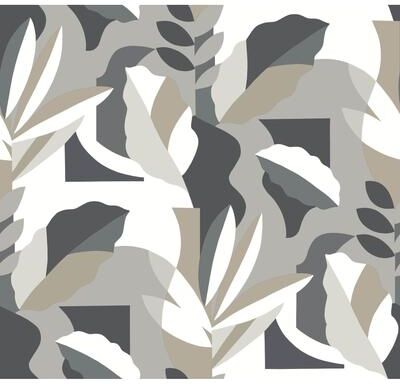
York Wallcoverings Papier Colle Black & White WallpaperTropical flora has been reduced and reimagined as a series of striking color blocked forms in Papier Colle, the leaves inked in shades of grey, white, and black, This Papier Colle Wallpaper measures approximately 27 inches wide by 27 feet long,...144,50 $*Shipping: 0,00 $Secure redirect to the provider
-
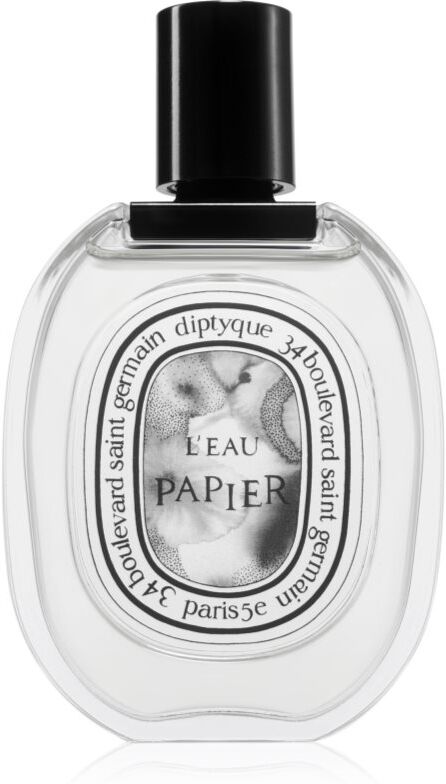
Diptyque L'Eau Papier EDT U 100 mlDiptyque L'Eau Papier, 100 ml, Eaux de Toilette unisex, Diptyque L'Eau Papier unisex Eau de Toilette represents a perfect harmony of freshness and fruity notes. This fragrance full of sparkling energy will become your trusted companion not just in the summer. a fragrance that doesn’t conform to trends a fresh combination making it possible to discover a fragrance that will captivate you utterly unisex – suitable for both women and men181,05 £*Shipping: 3,99 £Secure redirect to the provider
-
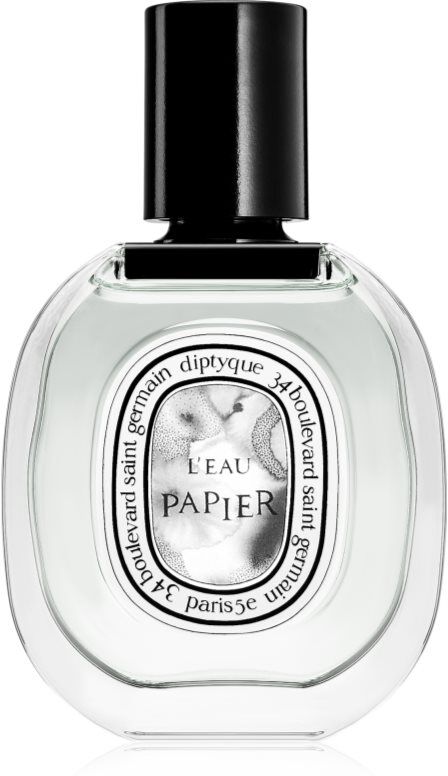
Diptyque L'Eau Papier EDT U 50 mlDiptyque L'Eau Papier, 50 ml, Eaux de Toilette unisex, Diptyque L'Eau Papier unisex Eau de Toilette represents a perfect harmony of freshness and fruity notes. This fragrance full of sparkling energy will become your trusted companion not just in the summer. a fragrance that doesn’t conform to trends a fresh combination making it possible to discover a fragrance that will captivate you utterly unisex – suitable for both women and men130,05 £*Shipping: 3,99 £Secure redirect to the provider

-
What conjugation does "dare" have?
"Dare" is a regular verb in Italian and belongs to the second conjugation. In the present tense, it is conjugated as follows: io do, tu dai, lui/lei dà, noi diamo, voi date, loro danno. **
-
How do I distinguish between the verbs of the E-conjugation and the consonant conjugation?
In Old Norse, the E-conjugation verbs typically end in -a in the infinitive form, while the consonant conjugation verbs end in -a, -i, or -u. Additionally, the E-conjugation verbs have a stem vowel that changes between the present and past tense, while the consonant conjugation verbs have a stem vowel that remains the same. It is also important to note that there are irregular verbs in both conjugations that do not follow these patterns. Therefore, it is important to study and memorize the specific conjugation patterns for each verb. **
-
What is the conjugation in German?
Conjugation in German refers to changing the form of a verb to match the subject of a sentence. This means adjusting the verb's ending based on the person (I, you, he/she/it, we, you all, they) and tense (present, past, future). German verbs can have different conjugations depending on these factors, making it important to learn the various verb forms to communicate accurately in the language. **
-
What does the consonantal conjugation mean?
Consonantal conjugation is a grammatical feature found in Semitic languages, where the root of a verb consists of consonants only, and the vowels are added to indicate different tenses, moods, and aspects. This type of conjugation is characterized by changes in the vowels within the root consonants to convey different meanings. Consonantal conjugation allows for a high degree of flexibility and complexity in verb forms, making it a key feature of Semitic language grammar. **

Is there a language without conjugation?
Yes, there are languages without conjugation. For example, Chinese is a language that does not have verb conjugation. In Chinese, verbs remain the same regardless of the subject or tense. Instead, time expressions or context are used to indicate when an action took place. **
What is the correct conjugation of s'asseoir?
The correct conjugation of "s'asseoir" in the present tense is as follows: - Je m'assois - Tu t'assois - Il/elle/on s'assoit - Nous nous asseyons - Vous vous asseyez - Ils/elles s'assoient **
Top-Angebote
Products related to Conjugation:
-
York Wallcoverings Papier Colle Black & White WallpaperTropical flora has been reduced and reimagined as a series of striking color blocked forms in Papier Colle, the leaves inked in shades of grey, white, and black, This Papier Colle Wallpaper measures approximately 27 inches wide by 27 feet long,...144,50 $*Shipping: 0,00 $Secure redirect to the provider
-
What is the correct conjugation?
The correct conjugation of a verb depends on the subject of the sentence and the tense being used. In English, regular verbs typically follow a pattern of adding -ed to form the past tense (e.g., walk becomes walked). Irregular verbs, on the other hand, have unique conjugations that do not follow a set pattern (e.g., go becomes went). It is important to pay attention to the subject of the sentence and the tense being used in order to correctly conjugate a verb. **
-
What is conjugation in German?
Conjugation in German refers to the process of changing the form of a verb to match the subject of the sentence. This means that the verb will have different endings depending on whether the subject is "I," "you," "he/she/it," "we," or "they." Conjugation is an important aspect of German grammar as it helps to indicate who is performing the action in a sentence. It is essential for learners of German to understand how to conjugate verbs in order to communicate effectively in the language. **
-
What conjugation does "dare" have?
"Dare" is a regular verb in Italian and belongs to the second conjugation. In the present tense, it is conjugated as follows: io do, tu dai, lui/lei dà, noi diamo, voi date, loro danno. **
-
How do I distinguish between the verbs of the E-conjugation and the consonant conjugation?
In Old Norse, the E-conjugation verbs typically end in -a in the infinitive form, while the consonant conjugation verbs end in -a, -i, or -u. Additionally, the E-conjugation verbs have a stem vowel that changes between the present and past tense, while the consonant conjugation verbs have a stem vowel that remains the same. It is also important to note that there are irregular verbs in both conjugations that do not follow these patterns. Therefore, it is important to study and memorize the specific conjugation patterns for each verb. **
Similar search terms for Conjugation
-
Diptyque L'Eau Papier EDT U 100 mlDiptyque L'Eau Papier, 100 ml, Eaux de Toilette unisex, Diptyque L'Eau Papier unisex Eau de Toilette represents a perfect harmony of freshness and fruity notes. This fragrance full of sparkling energy will become your trusted companion not just in the summer. a fragrance that doesn’t conform to trends a fresh combination making it possible to discover a fragrance that will captivate you utterly unisex – suitable for both women and men181,05 £*Shipping: 3,99 £Secure redirect to the provider
-
Diptyque L'Eau Papier EDT U 50 mlDiptyque L'Eau Papier, 50 ml, Eaux de Toilette unisex, Diptyque L'Eau Papier unisex Eau de Toilette represents a perfect harmony of freshness and fruity notes. This fragrance full of sparkling energy will become your trusted companion not just in the summer. a fragrance that doesn’t conform to trends a fresh combination making it possible to discover a fragrance that will captivate you utterly unisex – suitable for both women and men130,05 £*Shipping: 3,99 £Secure redirect to the provider
-
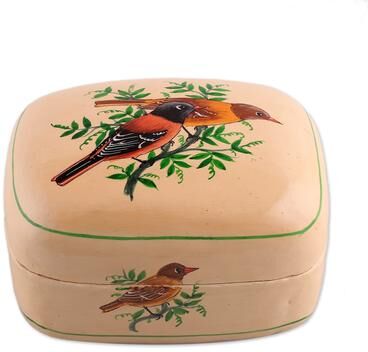
Novica Handmade Bird Saga Papier Mache Decorative BoxNature inspires many with its tender elements full of symbolic messages. Artisan Mohammad Hussain Baba is also captivated by the landscapes and species around the Indian region, capturing their beauty in this papier mache decorative box.75,98 $*Shipping: 0,00 $Secure redirect to the provider
-
Novica Handmade Valley Saga Papier Mache Decorative BoxNature inspires many with its harmonious elements full of symbolic messages. Artisan Mohammad Hussain Baba is also captivated by the landscapes and species around the Indian region, capturing their magnificence in this papier mache decorative box.75,98 $*Shipping: 0,00 $Secure redirect to the provider
-
What is the conjugation in German?
Conjugation in German refers to changing the form of a verb to match the subject of a sentence. This means adjusting the verb's ending based on the person (I, you, he/she/it, we, you all, they) and tense (present, past, future). German verbs can have different conjugations depending on these factors, making it important to learn the various verb forms to communicate accurately in the language. **
-
What does the consonantal conjugation mean?
Consonantal conjugation is a grammatical feature found in Semitic languages, where the root of a verb consists of consonants only, and the vowels are added to indicate different tenses, moods, and aspects. This type of conjugation is characterized by changes in the vowels within the root consonants to convey different meanings. Consonantal conjugation allows for a high degree of flexibility and complexity in verb forms, making it a key feature of Semitic language grammar. **
-
Is there a language without conjugation?
Yes, there are languages without conjugation. For example, Chinese is a language that does not have verb conjugation. In Chinese, verbs remain the same regardless of the subject or tense. Instead, time expressions or context are used to indicate when an action took place. **
-
What is the correct conjugation of s'asseoir?
The correct conjugation of "s'asseoir" in the present tense is as follows: - Je m'assois - Tu t'assois - Il/elle/on s'assoit - Nous nous asseyons - Vous vous asseyez - Ils/elles s'assoient **
* All prices are inclusive of VAT and, if applicable, plus shipping costs. The offer information is based on the details provided by the respective shop and is updated through automated processes. Real-time updates do not occur, so deviations can occur in individual cases. ** Note: Parts of this content were created by AI.